Interactions between integral membrane proteins and amphiphiles
■Subjects
▼Interactions between Eschericia coli outer membrane proteins and amphiphiles
▼Surface and solution properties of amphiphiles
▼Development of surfactant-selective electrode
Amphiphiles (surfactants, lipids) assume various shapes of molecular assemblies
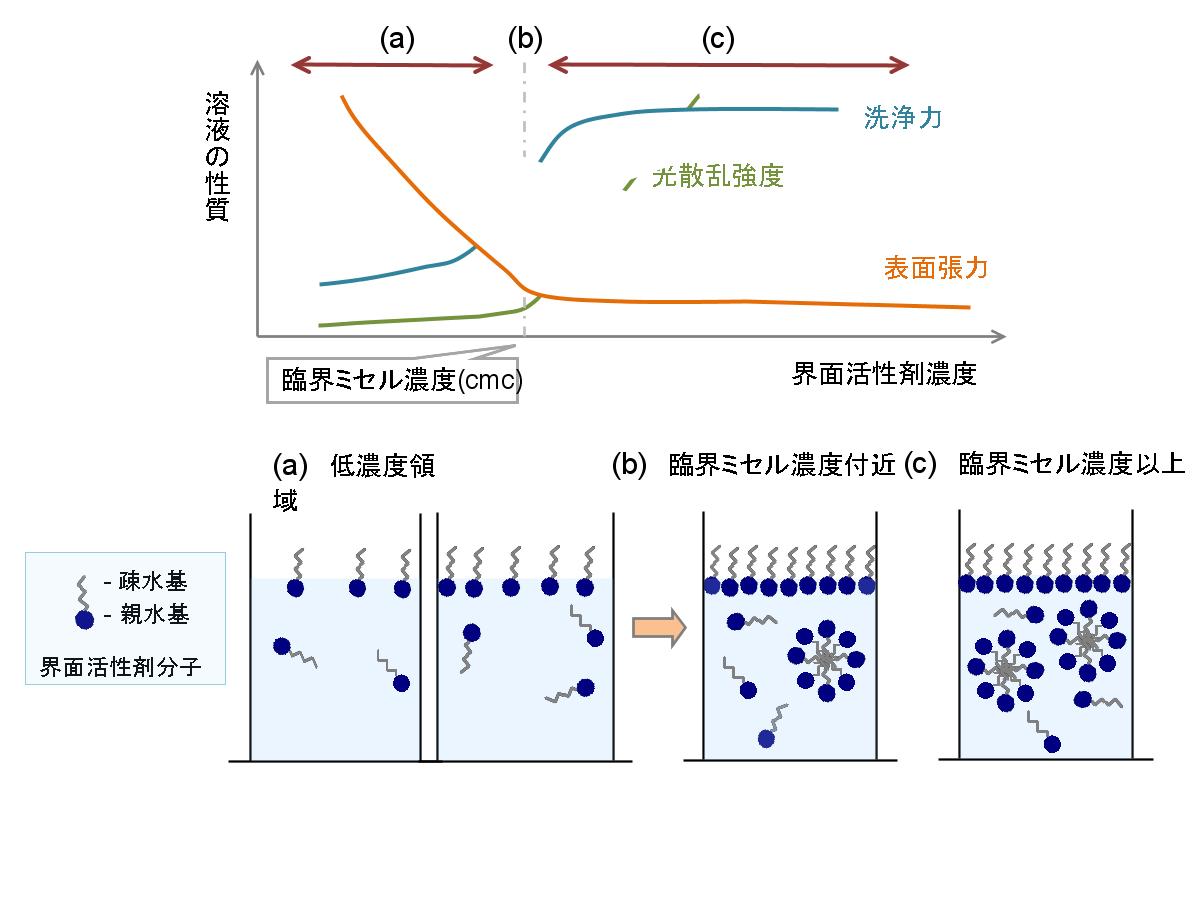
Assemblies of amphiphiles and their physico-chemical properties
Surfactants and lipids are classified into amphiphile, which have both hydrophilic and hydrophobic portions. Surfactants are widely used in detergents, cosmetics, foods, drugs, etc., and solubilize insoluble compounds.
Amphiphiles form various shapes of assembly according to the conditions, e. g., temperature, composition, etc. Physical properties of these assembly (assembly number, shape, etc.) are essential information in order to expect their functions involving the solubilization effect.
Biomembrane as amphiphiles assembly
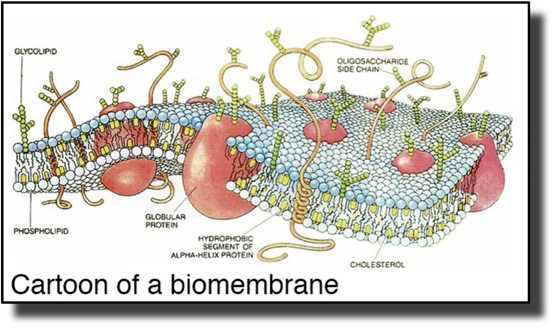
Biomembrane composed of various lipids, proteins, and carbohydrates.
Reprinted from http://www.cmu.edu/biophys/smsl/
Cells and cell organella are enclosed by biomembranes with a thickness of several nanometers. Biomembranes are mainly composed of lipid bilayer, in which proteins and carbohydrates are embedded. The other biological amphiphiles, fatty acids, choresterols, etc., also interact with biomembrane to exhibit a variery of biological activities.
We investigate how the various amphiphiles affect the membrane proteins from the point of view of molecular science.
