Research
We Want to Keep Eating Rice — Even Under Global Warming!
Global warming is raising serious concerns about its impact on crops, including rice. When rice is exposed to temperatures above 35°C, it can fail to set grain. Although rice has long been regarded as a heat-tolerant crop, much remains unknown about the mechanisms of heat-induced spikelet sterility, which varieties are truly tolerant, and the specific conditions under which sterility occurs. Working at field sites in the Philippines, India, Myanmar, China, and other countries, we investigate how environmental factors affect rice pollination and why certain varieties are more heat-tolerant than others.
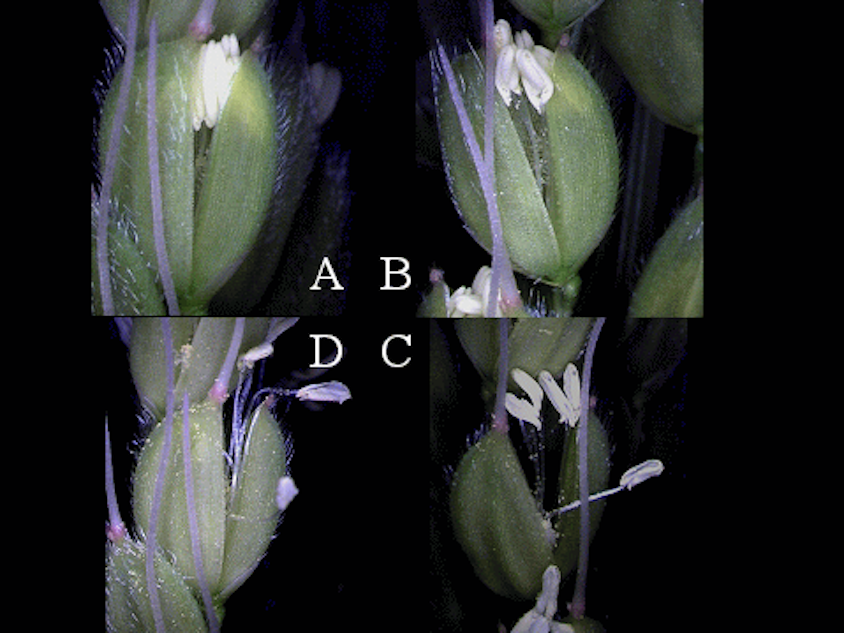
A rice flower in bloom.
Optimizing Agricultural Production
— Leveraging AI and Sensing Technologies —
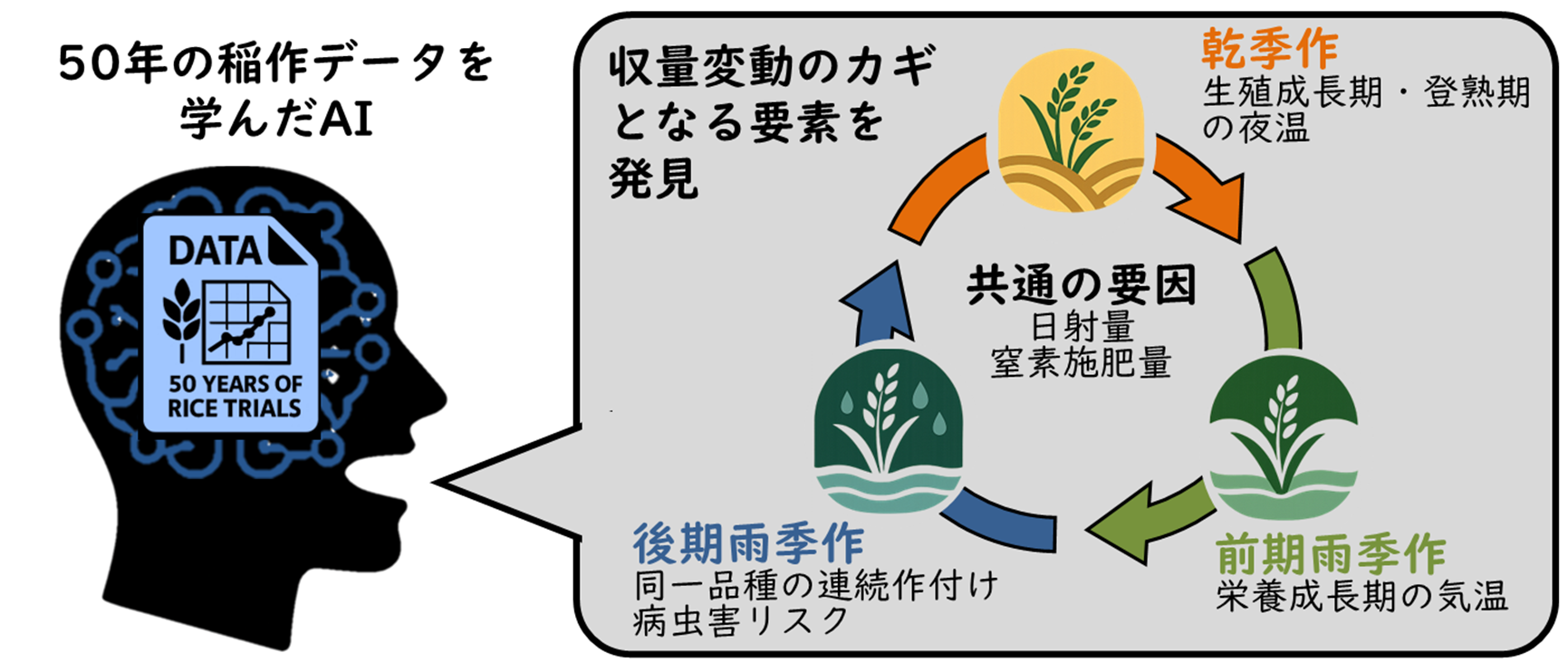
 Improving crop productivity calls for both better varieties and improved cultivation techniques. In practice, however, varieties and technologies developed at research institutions often fail to deliver expected results once they are deployed in actual farmers' fields, where soil, weather, and farm management interact in complex ways. Using AI and remote sensing as our key tools, we aim to identify the factors that determine crop production at the farm level — and ultimately to propose concrete strategies for improvement.

.jpg)